
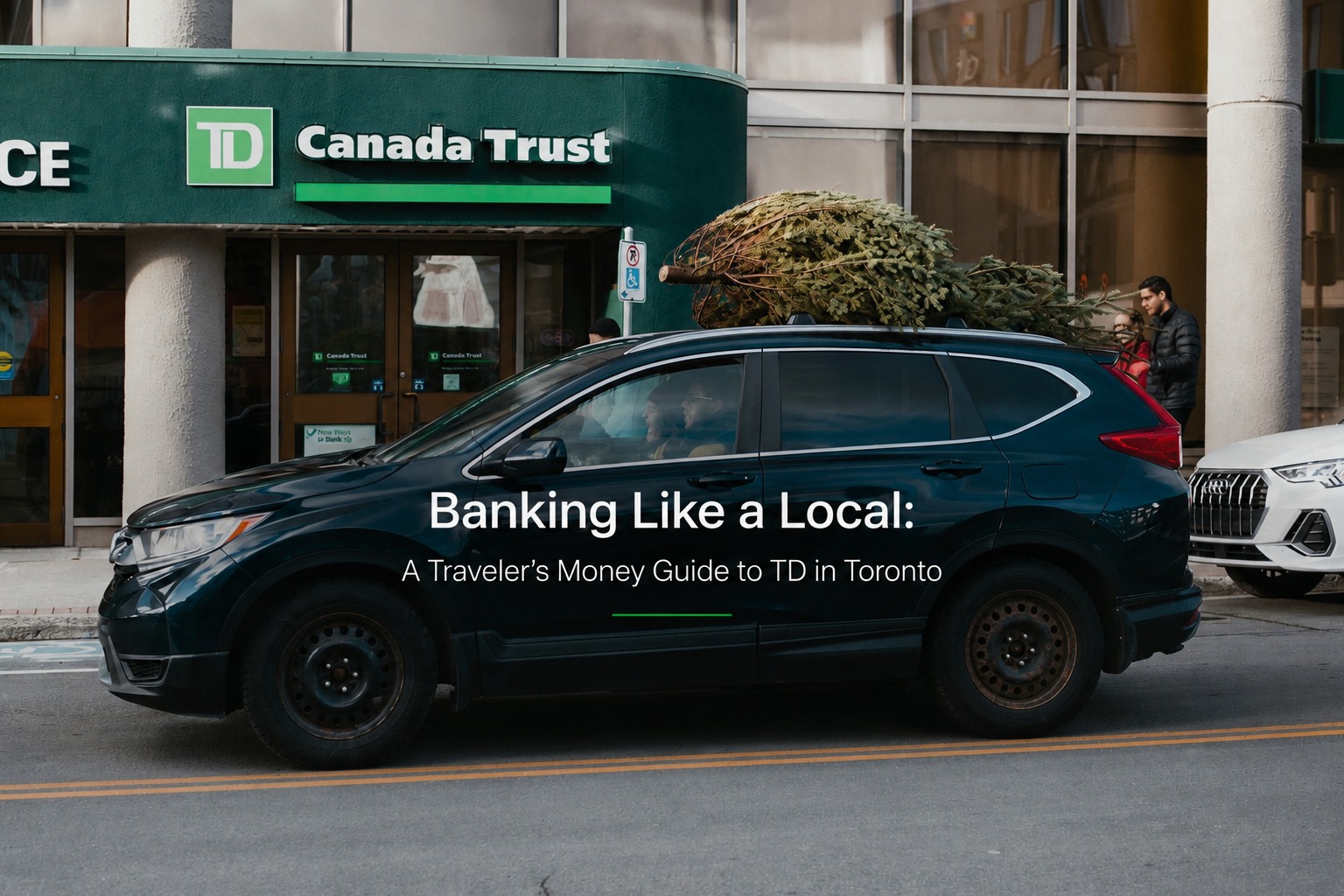
Banking Like a Local: A Traveler’s Money Guide to TD in Toronto
You land at Pearson, your phone finally finds a signal, and the first notification waiting for you is a currency conversion charge you didn’t budget for. Every traveler who has spent a card in a foreign city knows the feeling. In Toronto, where the green-and-white TD sign seems to appear on nearly every corner, the question isn’t whether you’ll bank here in some form. It’s whether you’ll do it the smart way or the expensive way.
Lock in your flight price before exchange rates move against you.
Compare Flight Prices Before You BookSection 01Why Your Home Card Isn’t Enough Here
Toronto-Dominion, better known simply as TD, is one of Canada’s “Big Five” banks and arguably the most visible one to a visitor. TD Canada Trust branches line Bay Street, Yonge Street, and pretty much every subway-adjacent strip mall in the Greater Toronto Area. That visibility is exactly why so many travelers assume TD will simply absorb whatever card they already carry. It won’t, at least not for free. Nearly every debit and credit card issued outside Canada carries a foreign transaction fee once it crosses the border, typically landing somewhere between 1% and 3% of each purchase. On a two-week trip with a few thousand dollars in spending, that difference is real money, not a rounding error.
The confusion deepens because “TD” means two different institutions depending on which side of the border you’re standing on. TD Bank, N.A. operates in the eastern United States, while TD Canada Trust is the retail arm you’ll actually use in Toronto. They share a name and a logo, not always a fee schedule. If you’re an American visitor assuming your existing TD Bank account travels north with zero friction, it doesn’t. You’re still a foreign cardholder here.
The practical takeaway: treat your home bank card as a backup, not your primary spending tool, and plan your Toronto money strategy before you land rather than after your first coffee purchase.
Section 02Where to Exchange Money Without Losing on the Spread
If you want physical Canadian dollars in hand, TD operates a dedicated Foreign Exchange Centre inside TD Centre at 55 King Street West, on the concourse level near King and Bay. It’s a purpose-built currency desk rather than a teller line, and it stocks a wide range of foreign banknotes for TD customers. You can also order currency through most TD branches or by phone for pickup, though non-standard currencies may take several business days to arrive, so this is not a same-day airport fix.
Here’s the part most visitors don’t realize: TD isn’t automatically your cheapest option. Independent currency exchange counters scattered through downtown Toronto, including well-known operators near Yonge-Dundas Square, frequently beat bank rates by a noticeable margin because they aren’t carrying the overhead of a full-service bank. The trade-off is convenience and trust. A bank counter is predictable and secure; a storefront exchange requires you to actually compare the posted buy and sell rates before handing over cash, since not every kiosk is equally competitive.
The rate on the board and the rate you actually get are two different numbers. Always ask what you’ll receive in hand, not the headline rate. — Common advice among frequent Toronto visitors
The airport is your last resort, not your first stop
Currency counters inside Pearson Airport exist for genuine emergencies, not for funding your whole trip. Airport rates are consistently the weakest in the city because they’re pricing in a captive, time-pressured customer. If you’re landing at Pearson and need Canadian dollars only to cover a taxi or transit fare, withdraw a small amount from an airport ATM instead of exchanging cash at the counter, then handle the rest downtown.
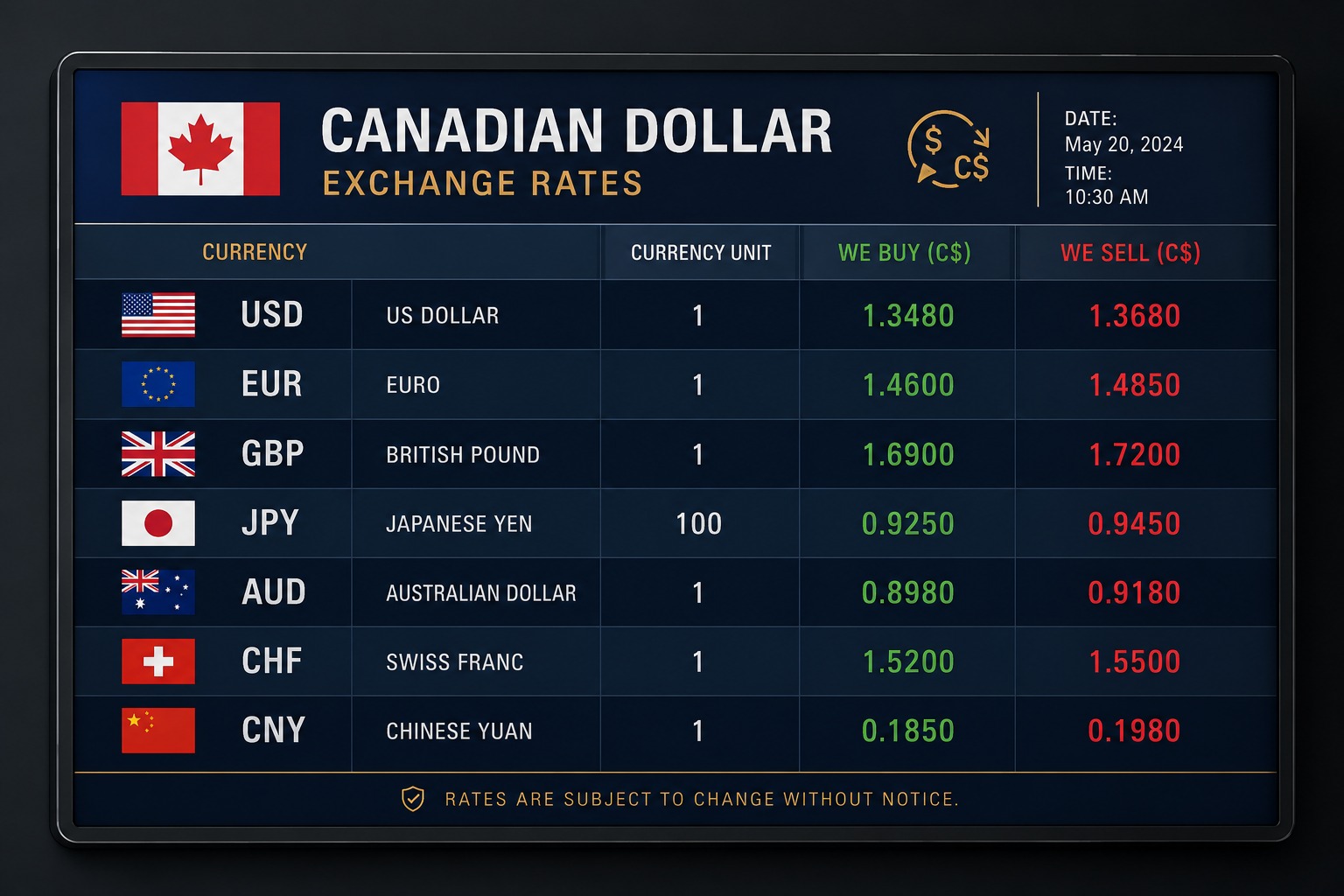
On an earlier trip through downtown Toronto, I changed a large sum at the first exchange counter I saw near the subway exit, only to notice three blocks later that a second counter was offering a visibly better rate. The fix is simple: check two exchange points before committing, especially for larger amounts, since the spread between competitors in the same neighborhood can be surprisingly wide.
Section 03ATMs, Tap-to-Pay, and Everyday Spending
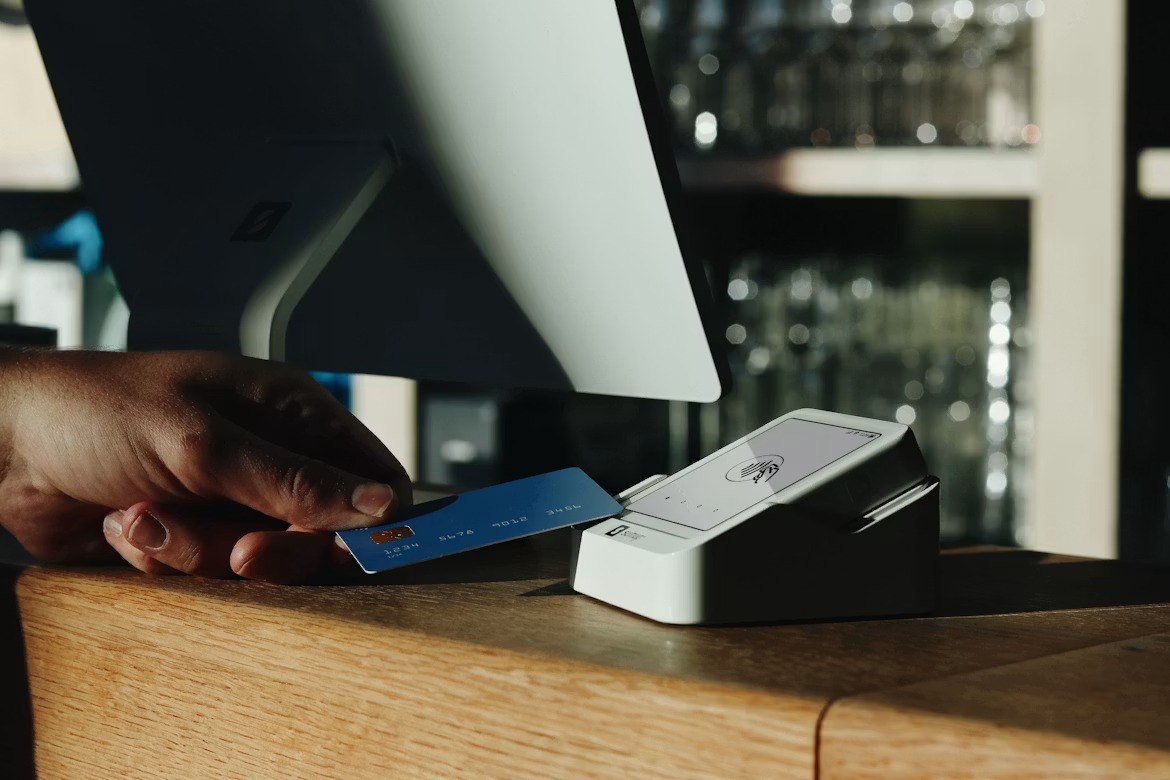
Toronto is an overwhelmingly tap-to-pay city. Coffee shops, streetcars, market stalls, even some food trucks expect a contactless card or phone wallet, and cash is increasingly the exception rather than the rule. That’s good news for convenience and bad news for your wallet if your card charges a foreign transaction fee on every single tap. TD debit and ATM cards used abroad by non-Canadian TD customers typically carry a foreign exchange fee near 3% of the transaction, plus a flat non-network ATM surcharge on top when you withdraw from a machine outside your home bank’s network. Multiply that by dozens of small purchases over a week and it adds up fast.
Skip a museum queue while your money strategy is already sorted.
Book Skip-the-Line TicketsThe single most effective move for a visiting traveler is arriving with a card, credit or debit, that charges zero foreign transaction fees at home, then using TD or any Canadian ATM strictly for cash top-ups rather than daily spending. When you do need an ATM, using one inside a TD branch rather than a standalone machine in a convenience store or bar generally means a cleaner rate and no surprise third-party surcharge stacked on top.
Always choose to be billed in Canadian dollars, not your home currency, when a card terminal or ATM asks. That on-screen “convert to USD/EUR now” option is dynamic currency conversion, and it almost always applies a worse exchange rate than your own bank would.
Section 04Longer Stays: Newcomers, Students, and Snowbirds
Not everyone reading this is passing through for a week. If you’re arriving as a student, a new permanent resident, or someone splitting the year between two countries, the calculation changes. Opening an actual Canadian chequing account, at TD or any of the major banks, removes the foreign transaction fee problem entirely for day-to-day spending because you’re transacting in your own currency. TD’s premium account tiers also waive some non-network ATM surcharges and offer preferential currency conversion, though these usually require maintaining a minimum monthly balance to unlock.
If you plan to send or receive money internationally rather than just spend locally, know the cost structure going in. Outgoing wire transfers and incoming transfers both carry flat fees on top of the exchange rate applied, and that rate itself typically includes a markup over the interbank rate you’d see on a currency converter website. For a single large transfer, a dedicated international money transfer service will usually beat a traditional bank on both the fee and the rate. For everyday spending, though, a Canadian debit card from any major bank remains simpler than juggling multiple apps.

Whatever your situation, bring two pieces of government-issued identification and, if you’re opening an account as a newcomer, any immigration documents showing your status. Canadian banks are generally efficient with this process, but arriving prepared saves a second trip.
Section 05Practical Info Before You Walk Into a Branch
Most TD branches in the downtown core open around 8 a.m. and close by early evening on weekdays, with shorter hours on Saturdays and many locations closed Sundays, though hours vary by branch, so it’s worth a quick check before you plan a visit around one specific location. ATMs, by contrast, are available around the clock at nearly every branch and in high-traffic spots like subway stations and shopping concourses. If you’re carrying an unusually large amount of foreign cash to exchange, calling ahead to confirm a branch has that currency in stock will save you a wasted trip, since not every location carries every denomination on hand. For anyone comparing insurance alongside their banking plans, it’s also worth reading what TD travel insurance actually covers and where it falls short before assuming a credit card’s built-in coverage is enough on its own.
If you’d rather compare fee structures across several Canadian banks before choosing where to spend, TorontoBook’s roundup of the best travel credit cards for 2026, ranked by travel class, breaks down which cards waive foreign fees entirely, a detail that matters more in a tap-to-pay city like Toronto than almost anywhere else you’ll visit this year.
Frequently Asked Questions
Not automatically. TD Bank, N.A. in the US and TD Canada Trust are related but separate retail operations, and most US TD debit cards still incur a foreign transaction fee and possible ATM surcharge when used in Canada. Check your specific account terms before you travel.
A small amount of cash for arrival costs (transit, tips, a taxi) is worth arranging before you fly. For the bulk of your trip budget, Toronto’s downtown exchange counters and bank rates are usually more competitive than what you’ll find at your home airport.
Tap-to-pay covers the vast majority of situations, from transit to restaurants. Still, carry a modest amount of cash for smaller vendors, farmers markets, and the rare card reader outage, which does happen occasionally.
Typically two pieces of government-issued ID plus documentation of your immigration status, such as a study or work permit or permanent residence confirmation. Requirements can vary slightly by branch, so calling ahead is a good habit.
Safe travels, and smart spending.
If this guide saved you a currency headache, save it to Pinterest for your next Toronto trip and share it with anyone about to book a flight north.