
The Best Hotels in Toronto for Every Budget in 2026
From waterfront towers with skyline views to reliable budget chains a few subway stops from downtown, here’s how to pick the right Toronto hotel for your trip, and the neighbourhoods that actually make sense to book.
Toronto hotel prices swing harder than most first-time visitors expect. The same night, the same city, can mean CAD 90 at a reliable budget chain or CAD 600 at a lakefront tower, and the difference often comes down to a six-block radius rather than the quality of the hotel itself. This guide breaks Toronto’s best hotels down by neighbourhood and budget, so you’re booking based on what actually matters for your trip rather than just star ratings.
Best Neighbourhoods to Base Yourself
Where you stay matters more in Toronto than in most cities, because the downtown core is genuinely walkable but spread across a few distinct districts, each with its own personality.
- Yorkville — the city’s high-end shopping and gallery district, quieter at night, and home to several of Toronto’s top luxury properties.
- Entertainment District — walking distance to the CN Tower, Rogers Centre, and most downtown nightlife, the highest-energy base for a short visit.
- Harbourfront — waterfront views and easy ferry access to the Toronto Islands, ideal if a lake view matters to your trip.
- Queen Street West — creative, gallery-driven, and full of independent restaurants, a good pick for a more local feel.
- Kensington Market — eclectic, budget-friendlier, and closest to the University of Toronto campus.
Luxury Picks
Four Seasons Hotel Toronto
Set in Yorkville, this is the city’s most consistently recommended luxury address, with a well-known French restaurant, an on-site spa and wellness centre, and expansive city views from most suites. A strong choice if fine dining and a quieter, gallery-district setting matter to your stay.
Shangri-La Toronto
Located in the Entertainment District, with floor-to-ceiling windows, an in-house spa, and a signature restaurant that draws locals as well as guests. Its lobby lounge, with a handcrafted Italian piano, is worth a stop even if you’re not staying there.
Fairmont Royal York
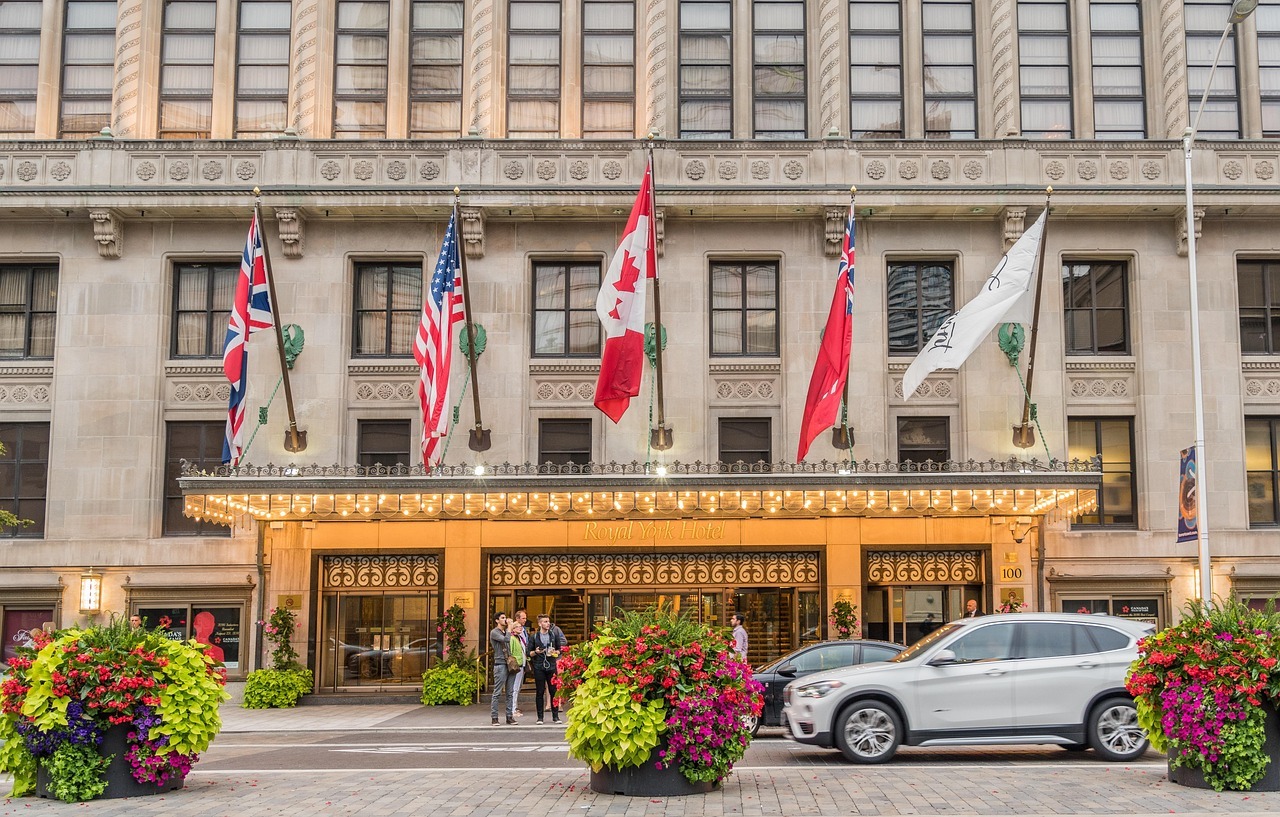
A nearly century-old landmark directly across from Union Station, blending historic character with consistently well-maintained rooms. Its central location makes it one of the easiest hotels in the city to reach without a car, right at the transit hub connecting the subway, GO Transit, and the airport express.
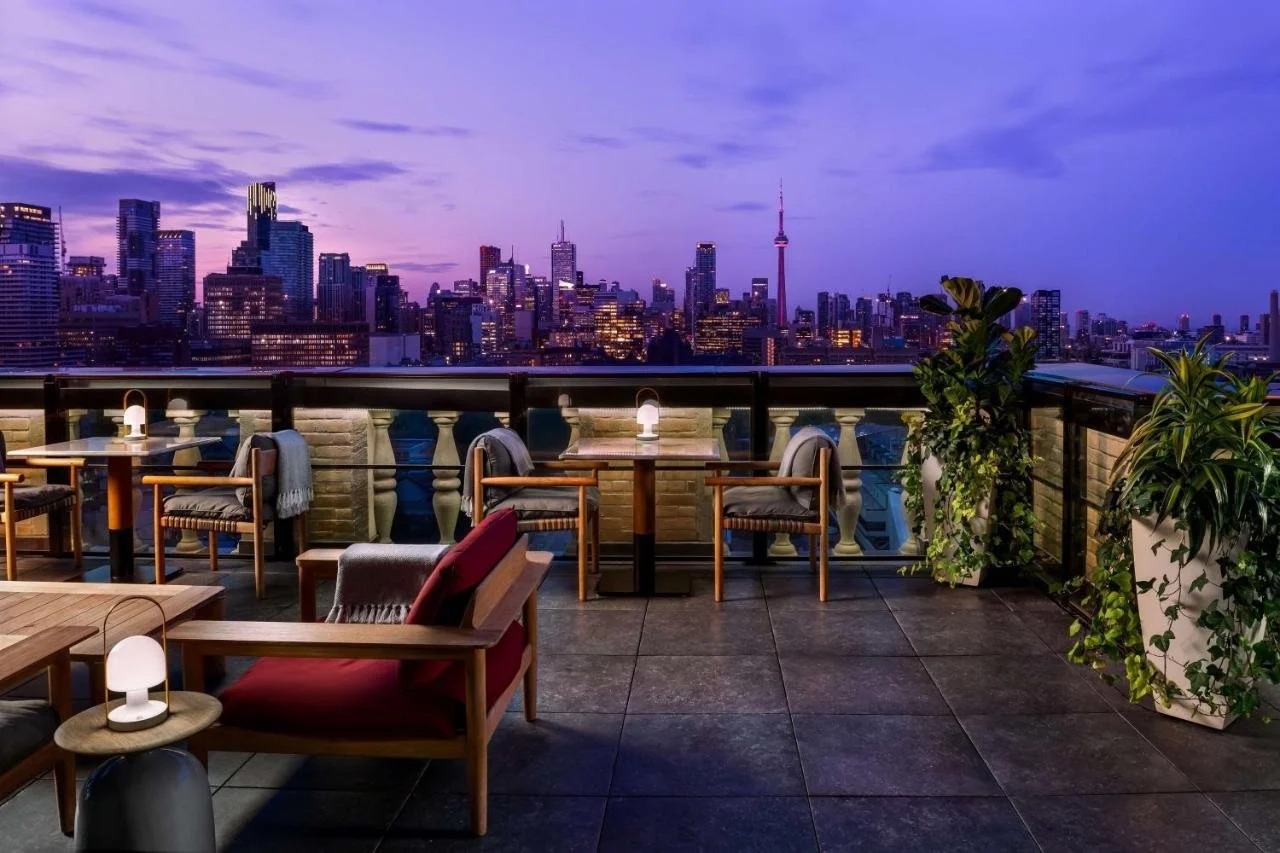
Yorkville and the Entertainment District host most of Toronto’s top-tier luxury properties.
Some links on this page are affiliate links — booking through them costs you nothing extra and helps support this site.
Mid-Range & Budget Picks
Toronto’s mid-range tier, roughly CAD 150 to CAD 250 a night, offers some of the best value in the city. The Holiday Inn on Carlton Street has over 500 reliable rooms, an indoor pool, and sits walking distance from the Eaton Centre and the Art Gallery of Ontario. The Comfort Hotel on Charles Street, near Yonge and Bloor, runs closer to CAD 130 to CAD 200 with a complimentary breakfast included, a short walk from Yorkville.
Budget travellers have solid options too. Downtown budget hotels start around CAD 70 to CAD 90 a night, and Toronto’s hostel scene offers dorm beds from roughly CAD 25 to CAD 60 downtown, with quieter, cheaper west-end options in the Junction neighbourhood trading a slightly longer commute for a noticeably lower price.
A budget hotel two subway stops from downtown almost always beats a mediocre downtown hotel at the same price. — A rule most repeat Toronto visitors learn the hard way
I’ve booked the “central” option purely for convenience more than once and regretted it when the room itself turned out to be the weak link, thin walls, no real view, a lobby that looked better in photos than in person. What actually worked better on a repeat trip was booking a well-reviewed mid-range hotel two subway stops out and using the fifteen minutes of transit time as a buffer to plan the day. The practical takeaway: proximity matters less than the TTC map suggests once you’re already walking distance from a subway station.
Boutique & Character Stays
If a chain hotel isn’t the point of the trip, Toronto’s boutique tier is worth a look. The Annex neighbourhood has a small boutique hotel with design-forward rooms from around CAD 130 to CAD 200 a night, a quieter alternative within easy subway access of downtown. Nearby, the Madison Manor offers Victorian-era character in a converted Edwardian house, with continental breakfast included and a five-minute walk to the Spadina subway station. Kensington Market and Chinatown add a handful of small, family-run guesthouses from around CAD 120 a night, trading hotel amenities for genuine neighbourhood character.
Booking Timing
Prices in Toronto move noticeably with the calendar. Summer weekends and major event dates, think playoff runs, festivals, or convention weeks, can push even mid-range rates up by fifty percent or more with little warning. Booking six to eight weeks ahead for a summer weekend, or simply shifting a flexible trip to a Tuesday through Thursday stay, is one of the easiest ways to cut the total cost of a Toronto hotel without downgrading the neighbourhood.
Quick Facts
- Luxury$300–$600+/night
- Mid-range$150–$250/night
- Budget hotel$70–$150/night
- Hostel dorm$25–$60/night
Tips & FAQ
Once you’ve picked a hotel, it’s worth mapping out what’s actually walkable from it. This guide to Toronto’s best self-guided walking routes pairs well with almost any downtown hotel and costs nothing beyond comfortable shoes, and if your stay includes a trip out to the waterfront, this Toronto Island ferry guide covers the timing details worth knowing before you head to the terminal.
For up-to-date neighbourhood maps and official visitor information, Destination Toronto, the city’s official tourism board, is a reliable source for confirming current events, closures, or seasonal pricing trends before you book.
Save this guide before you start comparing rates. Prices shift by neighbourhood and season more than most visitors expect, and having the budget-by-district breakdown on hand will make the booking decision faster.