
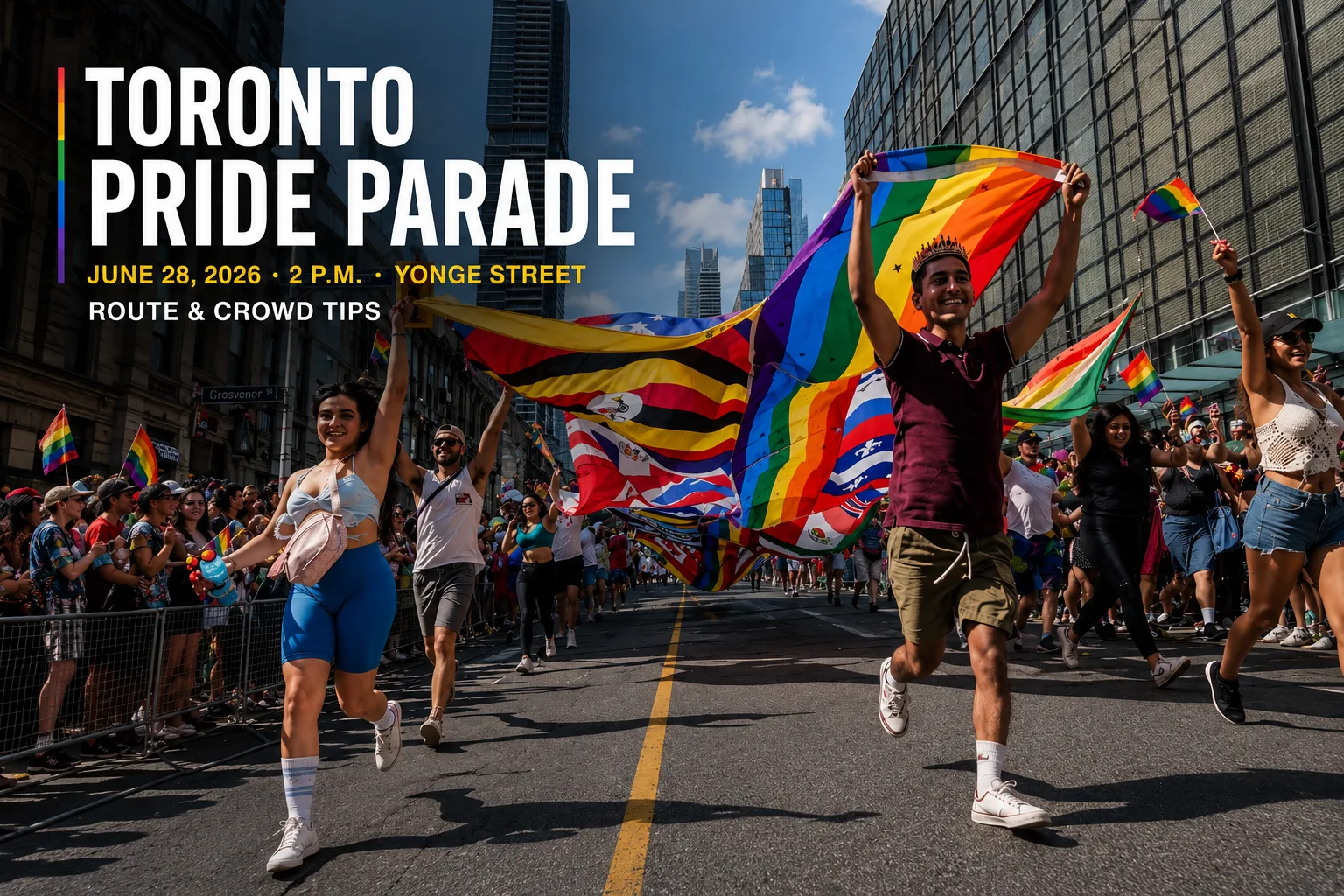
When Is the Toronto Pride Parade?
Dates, the route down Yonge Street, road closures, and the small details that make a good day even better.
If you have ever tried to plan a trip around Pride, you already know the frustration: Pride Month is a whole month, but the parade itself is one specific afternoon, and getting that date wrong means missing the thing you actually flew in for. So here is the short answer first. Pride Toronto‘s festival weekend runs Thursday, June 25 through Sunday, June 28, and the parade itself, the big one down Yonge Street, happens on Sunday, June 28, starting at 2 p.m.
That single afternoon is the culmination of a month of programming across the city, and 2026 carries a bit of extra weight since it marks the festival’s 45th anniversary. Knowing the difference between “Pride Month,” “Pride weekend,” and “the parade” will save you from showing up on the wrong Tuesday wondering where everyone went. Each of those three windows has a different rhythm, and understanding which one you are actually planning around changes how you should book flights, hotels, and even which neighbourhood to stay in.
If you are flying in specifically for the festival weekend, it is worth locking down airfare early since seats into Toronto Pearson fill up fast around Pride. Compare Flight Prices Before You Book to find a fare that works with your schedule, and keep an eye on flexible tickets in case your festival plans shift by a day.
If you have flight questions closer to your travel date, cancellations, baggage policy, or terminal information, TorontoBook.com is a handy resource for airline contact details and airport planning before you land.
How the Weekend Actually Unfolds
June programming opens quietly, with an official flag-raising ceremony at City Hall and neighbourhood events scattered through the month, including the Inside Out 2SLGBTQ+ Film Festival. Most visitors do not notice this build-up. What they notice is the festival weekend itself, four days of outdoor stages, community programming, and parties concentrated in and around the Church-Wellesley Village, often just called “the Village.”
The weekend has its own internal structure. Thursday and Friday tend to be lower-key, with community events, panel discussions, and smaller performances setting the tone. By Saturday, the Street Fair opens along Church Street, vendor booths and food trucks appear, and the energy noticeably picks up. The Trans March and Dyke March, both significant events in their own right with decades of history behind them, typically take place earlier in the weekend, and treating them as side notes to the Sunday parade undersells how much they matter to the community that built this festival in the first place.
The parade begins at Rosedale Valley Road and Park Road, then heads south down Yonge Street through the downtown core before turning onto Dundas Street West. It is a slow, three to four hour procession of floats, marching bands, community groups, and corporate entries, and the crowd along the route regularly climbs into the hundreds of thousands, making it one of the largest Pride parades anywhere in the world, second in size only to a small handful of global events.
Arrive by 12:30 p.m. for a good spot. The stretch between Wellesley and College has the most festive atmosphere, mostly because the Village is right there.
Getting There Without a Headache
Road closures around the route start early, sometimes as early as 8 a.m., with more streets shutting down through the morning as the parade approaches. Driving anywhere near downtown on parade day is not realistic, and honestly not worth attempting. The TTC is the obvious choice, and most guides agree it is the only sane way to reach the Village that afternoon. Give yourself extra time on transit too, since stations near the route get busy well before the parade starts, and some stops may see temporary crowd-control closures during peak arrival hours.
Late June in Toronto tends to run warm, sometimes uncomfortably so if you are standing on pavement for hours. Bring water, wear sunscreen, and if you can, pick a viewing spot with a bit of shade. A reusable water bottle solves more problems than people expect on a day like this, and refill stations tend to be scarce right along the parade barricades, so filling up before you settle into your spot is smarter than hoping to find one later.
What to Pack for a Full Day Outdoors
- A collapsible water bottle, filled before you reach the crowd
- A portable phone charger, since photos and videos drain batteries fast in the heat
- Comfortable, closed-toe shoes rather than sandals, for standing on pavement for hours
- A light, breathable layer for the evening once the sun starts to dip
Beyond the Parade Itself
The Street Fair, with vendor booths, food trucks, and live music, typically runs from Friday through Sunday of the festival weekend, so there is plenty to do even before Sunday’s main event. Programming also extends beyond downtown into Scarborough, North York, and Etobicoke, so it is very much a city-wide celebration rather than a single-street event, and visitors who only plan around Yonge Street sometimes miss smaller, quieter neighbourhood events that can be just as memorable.
Church Street itself becomes the unofficial hub for the entire weekend. Long-running Village institutions host special programming, extended patio hours, and themed nights that run well past the parade’s end. If dancing and nightlife are part of your plan, know that the bigger circuit parties sell tickets in advance and frequently sell out, so it is worth locking those in before you land rather than hoping to buy at the door.
- The parade route and road closure map change slightly year to year, always check the current schedule on pridetoronto.com closer to your trip
- Hotels in and around the Village book up well ahead of Pride weekend, plan accommodation early
- If the Yonge Street crowd feels too dense, the side streets near Wellesley still have a good view with a bit more breathing room
- Public washrooms along the route are limited; many nearby cafes and shops post signs allowing Pride visitors to use their facilities for a small purchase
Once the parade wraps up, plenty of visitors use the rest of the weekend to see more of the city. If you want to line up museum or landmark tickets in advance so you are not queuing on top of everything else, Book Skip-the-Line Tickets for some of Toronto’s other attractions before your trip.
A Bit of History Behind the Celebration
Toronto’s Church-Wellesley Village has held this identity since the 1970s, making it one of the oldest and most complete LGBTQ+ neighbourhoods in North America, a detail that gives the parade a sense of history rather than just spectacle. What began as small, community-organized gatherings decades ago has grown into a four-day festival drawing well over a million visitors, without losing the neighbourhood roots that started it. That layered history is part of why longtime attendees describe the parade as feeling different from a typical street festival, it carries decades of advocacy alongside the celebration.
If you want the background on how the neighbourhood came to be, Wikipedia’s entry on Church and Wellesley is a solid starting point, and it helps explain why the parade route runs where it does rather than through some other part of downtown.
Frequently Asked Questions
Is the parade free to watch?
Yes. Watching from the street is free and open to everyone. Some paid viewing areas and rooftop events exist for those who want a more curated experience, but the standard curbside view costs nothing.
Is it family-friendly?
Families do attend, particularly earlier in the parade route and away from the densest sections of the Village, though the atmosphere is generally adult-oriented by evening as parties ramp up.
What happens if it rains?
The parade proceeds rain or shine except in cases of severe weather, so it is worth packing a light rain layer rather than assuming the event will be postponed.
Whether you are watching from the curb or marching down Yonge Street yourself, the short version to remember is this: mark Sunday, June 28, 2026, in your calendar, arrive early, take the subway, and dress for a hot afternoon. Everything else about the day tends to sort itself out once you’re there.
Where to Stay for the Weekend
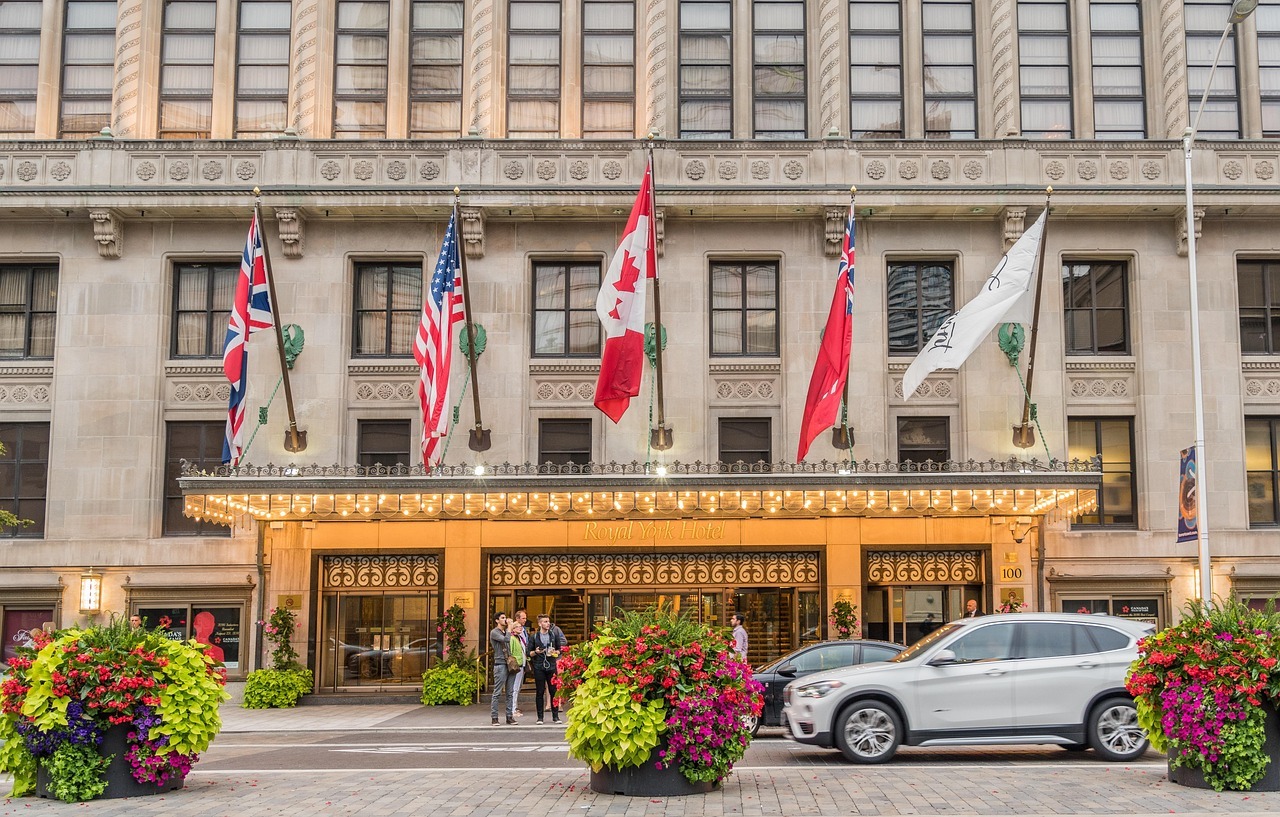
Location matters more for Pride than for an average Toronto weekend. Staying within walking distance of the Village, roughly bounded by Yonge, Bloor, Parliament, and Carlton, means you can duck back to your room to cool off or change before heading back out, which is not a small thing on a hot, crowded afternoon. Hotels along Bloor-Yonge and in the downtown core tend to book out months ahead for Pride weekend specifically, so this is one trip where booking early genuinely pays off rather than being generic travel advice.
If Village hotels are full or priced beyond your budget, consider properties along the subway line further north or west. The TTC makes almost anywhere in the city reachable within 20 to 30 minutes, and a slightly longer commute in exchange for a lower rate is often a fair trade for a weekend that is mostly spent outdoors anyway.
A Note From Experience
I have covered a fair number of large city festivals over the years, and Pride weekends in general share a common pattern: the official road closure notices are usually conservative, meaning the actual footprint of the crowd often spills a block or two beyond what is posted. Treat the published closure map as a floor, not a ceiling, and build a little extra walking time into your plans on either side of the parade window. That single adjustment has saved me more headaches than any other piece of festival planning advice.