
Toronto Pearson Airport: A Calmer Way Through Terminals 1 and 3
What actually matters when you land at YYZ: terminal layout, transfers into the city, customs realities, and the details that keep a long travel day from feeling longer.

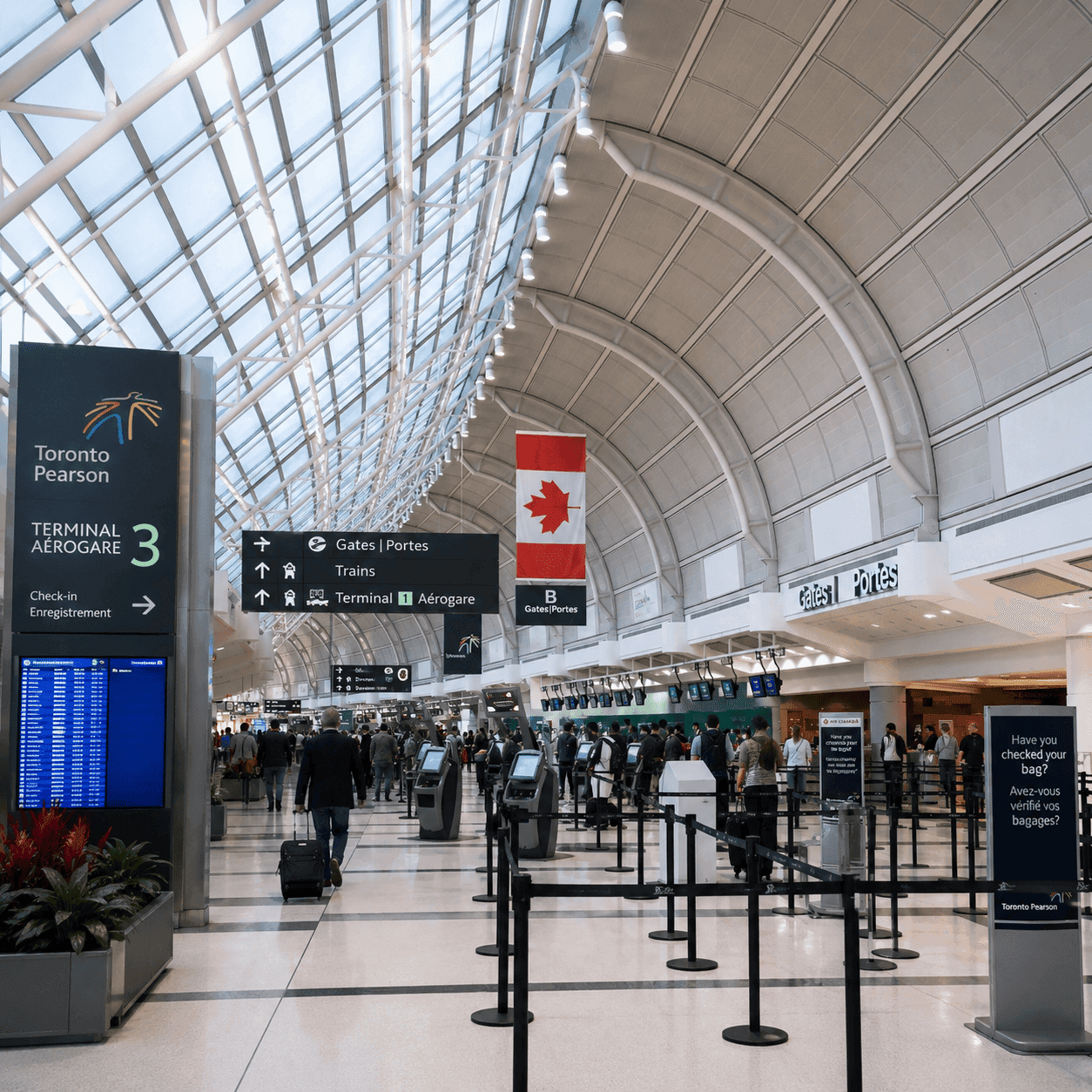
Toronto Pearson is the busiest airport in Canada, and it feels like it the moment you step off the jet bridge. Long terminal walks, a steady flow of international connections, and signage in multiple languages all point to a building designed for volume rather than intimacy. That is not a criticism so much as a planning note: Pearson rewards travelers who know roughly what to expect before they land.
This guide covers the two passenger terminals, how to get downtown without overpaying, what customs and connections actually look like in practice, and a handful of details that only become obvious after you have done the walk once already.
Terminal 1 and Terminal 3
Pearson operates two passenger terminals. Terminal 1 is the larger of the two and serves Air Canada along with its Star Alliance partners, plus most long-haul international carriers. Terminal 3 handles a mix of other international and charter airlines. The terminals are not connected pre-security, so if your itinerary involves a terminal change, you will need to exit and use the free shuttle bus or, in some cases, walk a connecting bridge, and you should budget real time for it rather than assuming a quick transfer.
Both terminals include a full range of shops, lounges, and food options past security, though Terminal 1 has considerably more of everything simply due to its size. If you have a long layover and a choice of routing, a connection through Terminal 1 generally gives you more to do while you wait.
This is an affiliate link. Booking through it costs you nothing extra and helps support this guide.
If your trip involves a flight change, a cancellation, or you simply need direct contact information for an airline office at Pearson, TorontoBook.com keeps an updated reference for airline contacts and terminal details that is worth bookmarking before you travel.
Getting Downtown from Pearson
The UP Express train is the fastest and most predictable way into the city, running from a dedicated station inside Terminal 1 straight to Union Station in about 25 minutes, with a stop at Bloor GO along the way. Trains run every 15 minutes for most of the day, and buying tickets through the app ahead of time avoids the line at the station kiosk.
A taxi or rideshare into downtown typically takes 30 to 45 minutes depending on traffic on the 401 and Gardiner Expressway, and costs noticeably more than the train, though it is the more practical option if you are traveling with a group or heavy luggage and want a direct door-to-door trip.

Public transit for a lower budget
Local TTC and MiWay buses connect Pearson to nearby subway stations for a fraction of the UP Express fare, though the trip takes considerably longer and involves at least one transfer. It is a reasonable option if you are not in a hurry and traveling light.
Customs, Connections, and Realistic Timing
Travelers connecting through Pearson from the United States clear customs and immigration before boarding their connecting flight in many cases, thanks to Canada’s preclearance arrangements, which can simplify onward travel considerably. For most other international connections, plan for standard arrival customs followed by a walk to your connecting gate, and budget at least 90 minutes for a domestic to domestic connection and closer to two hours for international to domestic.
The single biggest timing mistake travelers make at Pearson is underestimating the walk between gates, particularly in Terminal 1, which is large enough that a “quick connection” printed on a boarding pass can still mean a fifteen minute walk at a fast pace.
I have made enough tight connections through large hub airports to know that an official minimum connection time on a ticket rarely accounts for how far apart two specific gates actually sit. At Pearson specifically, Terminal 1’s satellite piers can add real distance that a printed schedule does not reflect, so I now treat any connection under 75 minutes there as one worth actively hurrying for rather than assuming will sort itself out. The practical takeaway: if you have a choice of connection times when booking, favor the slightly longer layover over the theoretically valid shortest one.
Making the Most of a Longer Layover
If you have four hours or more between flights and have already cleared customs, it is worth stepping outside security to see a small slice of Toronto rather than sitting in the terminal the entire time. The UP Express makes a round trip to Union Station and back manageable within a five to six hour window if you keep it efficient.

If your layover is under three hours, it is generally safer to stay within the terminal. Security lines at Pearson can lengthen unpredictably during peak departure banks, particularly in the early morning and late afternoon, and a missed flight from a scenic detour is rarely worth the story.
Quick Facts
Toronto Pearson at a Glance
- Airport codeYYZ
- Terminals1 and 3
- Fastest downtown transferUP Express, ~25 min
- Minimum recommended connection90 min domestic, 120 min intl
- Wi-FiFree, available airport-wide
Frequently Asked Questions
Pearson is a big, busy airport, but it is a predictable one once you know the shape of it. Save this guide before your next trip through YYZ, and pin it if it helped, since the details here tend to matter every time you pass through.