

Toronto to New York: Every Way to Get There in 2026
Flight, train, bus, or your own car: what each route actually costs, how long it really takes once the border is involved, and which one fits your trip.

Disclosure: This guide contains curated affiliate links. If you make a booking through these links, we may earn a small commission at no extra cost to you.
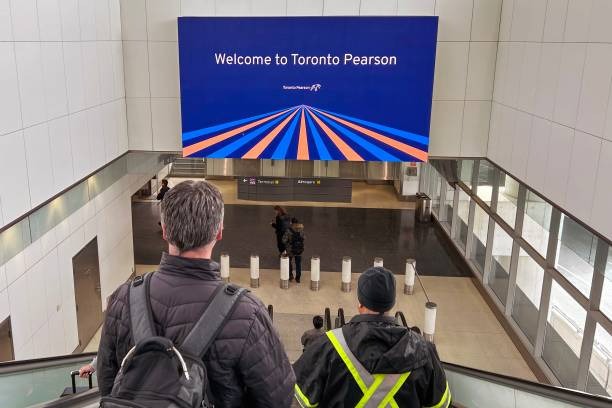
Pearson’s Terminal 1 at 6 a.m. has a specific sound: rolling suitcase wheels on tile, a gate agent repeating boarding groups, the low hum of the security line that has already formed before the coffee kiosks open. Somewhere past that line, in under two hours, you could be walking out of LaGuardia into a yellow cab queue instead. New York is close enough to Toronto that people treat the trip almost like a long commute, yet the actual experience of getting there varies wildly depending on how you go.
This guide breaks down the four realistic ways to travel from Toronto to New York: flying, the Amtrak train, long-distance buses, and driving yourself. Each has a different relationship with the one variable that trips people up most, the Canada-US border, so the comparisons below account for that, not just the distance on a map.
Flying is the fastest way from Toronto to New York at roughly one and a half hours in the air, the train is the most scenic at about twelve hours including a lengthy border stop, and an overnight bus is usually the cheapest option if you can tolerate an eleven to twelve hour ride.
Flying: Toronto to New York in the Air
Several carriers fly Pearson to New York’s three main airports, JFK, LaGuardia, and Newark, with flight time around ninety minutes. On paper that sounds like the obvious choice, and for a short trip it usually is. The catch is that Pearson runs US-bound flights through US border preclearance, meaning you clear American customs and immigration in Toronto before you ever board. That preclearance line is its own bottleneck and gets underestimated constantly.
Travelers who fly this route a lot mention two recurring frustrations in forum threads: the preclearance line at Pearson can run thirty to sixty minutes deep on weekday mornings even though the flight itself is short, and connecting through Newark instead of flying direct to JFK or LaGuardia sometimes adds more delay than it saves in ticket price. If you are planning to explore the city on foot once you land, check out these free Toronto self-guided walking routes for when you are back and want to do the same thing at home.
Preclearance lines at Pearson routinely stretch past thirty minutes during the early morning bank of US departures. It is worth checking in online and arriving with real buffer time, and comparing fares across dates first with a tool like this one to find the best flight deals before you commit to a specific morning flight.
Do I need a passport to fly from Toronto to New York?
Yes. A valid passport is required, a driver’s license or provincial ID is not sufficient for this border, regardless of how you travel.
Flying into New York for the trip? Compare fares across airlines and dates before you lock in your flight.
Compare Airfares Worldwide →Taking the Train: The Maple Leaf Route
Amtrak’s Maple Leaf service leaves Union Station once a day and follows the shoreline of Lake Ontario before crossing into the US near Niagara Falls, then tracking the Hudson River down into Manhattan’s Moynihan Train Hall. The scenery is genuinely the best of any option on this list. The tradeoff is time: the full run takes close to twelve hours, and a meaningful chunk of that is a stationary customs stop at the border where US officers board the train and check every passenger’s documents before it continues.
The train is not the fast option. It is the option for people who would rather watch the Hudson River go by than sit in a middle seat on a regional jet. — frequent Maple Leaf rider, r/trains
Getting Around NYC
The subway is the fastest way to move once you arrive; a contactless tap card works at every turnstile.
Where to Stay
Midtown puts you closest to Moynihan Train Hall if you are arriving by rail and want to minimize the first taxi ride.
Local Etiquette
Stand right, walk left on escalators, and keep subway conversation volume down during rush hour.
Insider tip: the mistake most first-timers make on the Maple Leaf
Assuming the border stop is quick. Budget at least an extra hour of schedule padding beyond the posted arrival time; delays at the customs stop are common enough that connecting travel plans in New York should never be booked tight against the train’s arrival.
Bus and Driving: The Budget and Flexible Routes
Long-distance buses, including overnight services, run the corridor for a fraction of the flight cost, typically covering the distance in eleven to twelve hours with a stop at the border for a document check. It is the least comfortable option but consistently the cheapest, and for travelers watching every dollar it is worth pairing with a broader look at this complete guide to traveling on a budget for strategies that apply well beyond this one route.
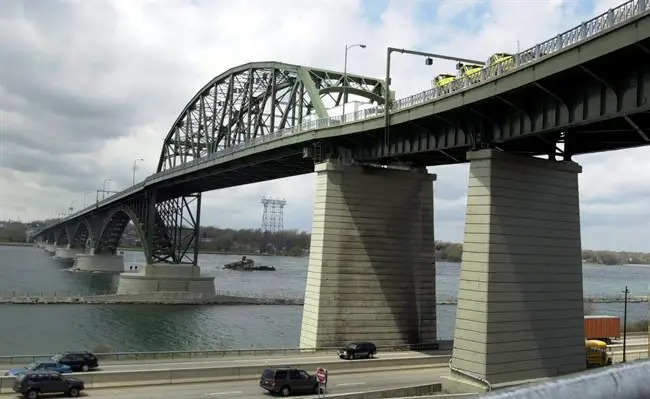
Driving gives the most flexibility and covers the roughly 800 kilometers in about eight hours in light traffic, not counting the border. Most drivers cross at the Peace Bridge near Buffalo or through the Thousand Islands, and wait times swing enormously by time of day. A recurring warning from road-trippers on forums is not to assume a Sunday evening crossing will be quick just because the drive itself was smooth; that is exactly when returning weekend traffic backs up hardest. Checking real-time border wait data before you leave, available through the Canada Border Services Agency’s official site, takes two minutes and can save you an hour.
Is driving a good option for families?
Generally yes. It is the only option that lets you set your own schedule and stop when needed, though the eight-plus hour drive is worth splitting with breaks for younger kids.
Quick Facts
- Distance
- ~800 km (500 mi)
- Document required
- Valid passport
- Currency in NYC
- US Dollar (USD)
- Main NYC airports
- JFK, LaGuardia, Newark
Local Etiquette on the Route
- Tipping in the US: 18 to 20 percent at restaurants is standard, higher than typical Canadian norms.
- Quiet car on trains: Amtrak’s quiet car is enforced; loud calls will get you politely reminded by staff.
- Cash vs. card: Contactless is accepted almost everywhere in both cities, but keep a little US cash for smaller vendors.
Suggested Trip Plan
Depart Toronto, morning
Take an early flight or the morning train to arrive in New York with most of the day still ahead of you.
Full day in New York
Use the subway to cover neighborhoods; book any major attraction tickets ahead to skip weekend queues.
Second day, slower pace
Save one afternoon unscheduled; New York rewards wandering as much as itinerary-following.
Return to Toronto
Build in extra buffer before your flight or train departure, especially if returning through preclearance on a weekend.
Want tickets to a major New York attraction booked before you land?
Reserve Skip-the-Line Tickets →Tips & FAQ
Common questionsDo I need a passport to travel from Toronto to New York?
Yes. A valid passport is required for all travel between Canada and the United States, whether you fly, take the train, ride a bus, or drive. A driver’s license alone is not accepted at the border.
What is the cheapest way to get from Toronto to New York?
An overnight or off-peak bus is usually the cheapest option, often less than a routine dinner out if booked a few weeks ahead, though the trip takes around eleven to twelve hours including the border stop.
Is the train from Toronto to New York worth it?
It is worth it for the scenery along Lake Ontario and the Hudson River and for skipping airport security, but budget a full day for the roughly twelve hour ride, including a lengthy stop for border inspection.
How long does it take to drive from Toronto to New York?
The drive covers roughly 800 kilometers and takes about eight hours in light traffic, not counting the border crossing, which can add anywhere from ten minutes to two hours depending on the time of day.
None of these four routes is wrong, they just serve different trips. A weekend dash favors the flight, a trip built around scenery favors the train, and a group traveling on a tight budget will do fine on the bus or in a shared car. For more inspiration once you are back home, browse these extraordinary travel experiences worth adding to your list.
Safe travels — TorontoBook