
Can I Travel with an eCOPR? The PR Travel Document Question
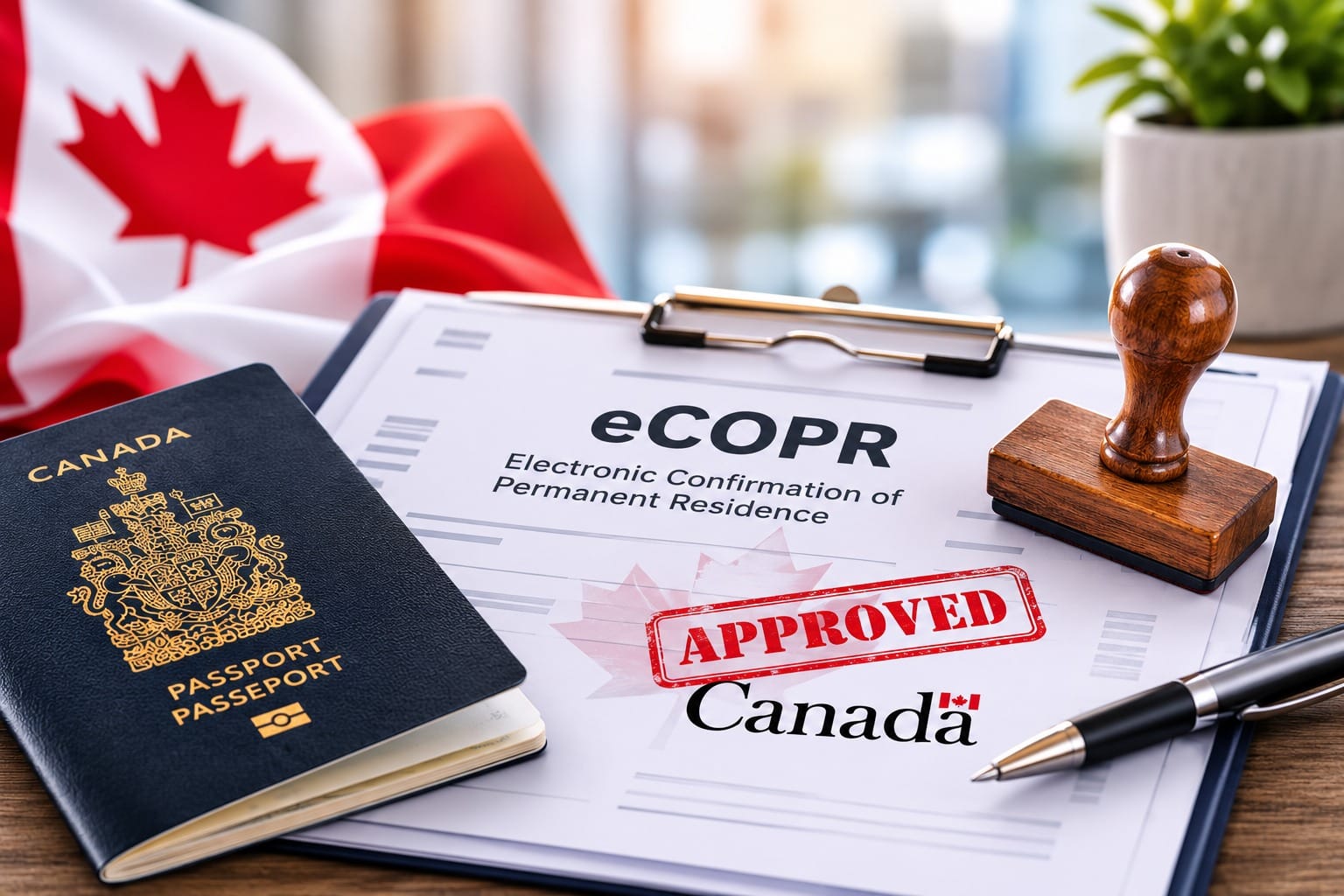
Your eCOPR confirms you’re a permanent resident the moment IRCC issues it. It does not, by itself, get you through an airline check-in counter back to Canada. Here’s the document that actually does, and how to avoid getting stuck abroad.

The email lands, you refresh the portal one more time, and there it is: your eCOPR. After months of waiting, it feels like the finish line. In a legal sense, it is. You are a permanent resident of Canada from that exact date. But if a trip is booked, or already underway, the next question matters more than the celebration: what document actually gets you on a plane?
This is the part IRCC’s own messaging tends to gloss over, and it trips up a surprising number of new PRs every month, especially those who finalized their landing through the PR Confirmation Portal while temporarily outside the country.
The Short Answer
An eCOPR is proof of status, not a travel document. Airlines do not accept it for boarding, and Canada Border Services officers expect one of two things when you arrive by plane, train, bus, or boat: a valid Permanent Resident (PR) card, or a Permanent Resident Travel Document (PRTD). If you have neither in hand, most carriers won’t let you board at all, and the decision to admit you without one is left entirely to a border officer’s discretion.
The confusion usually comes from timing. Your PR card is mailed only to a Canadian address, and only after your eCOPR is issued, which means there’s an unavoidable gap, often six to ten weeks, between becoming a PR and holding the physical card. If you need to travel internationally during that gap, planning ahead is not optional.

If You’re Still Physically in Canada
This is the easier scenario. If you received your eCOPR while inside Canada and haven’t left yet, the safest move is simply to wait for your PR card before booking any international trip. Most people receive it within six to ten weeks, though it can run longer during busy periods. There’s no way to speed up delivery, and IRCC cannot mail the card to a third-party address or anywhere outside Canada, so leaving before it arrives only complicates things.
If travel genuinely can’t wait, apply for a PR card as soon as your eCOPR arrives and monitor your IRCC account closely. Should the card not arrive before your departure date, you’ll need to apply for a PRTD from a Canadian visa office abroad before you can return, which adds real time and, often, an in-person visit to your itinerary.
Some links on this page are affiliate links. Booking through them costs you nothing extra and helps support this site.
If Your eCOPR Was Issued While You Were Abroad
Some applicants complete the PR Confirmation Portal steps, including the P1 and P2 email exchange with IRCC, while temporarily outside Canada, or they travel shortly after receiving their eCOPR without waiting for the card to arrive. In either case, the moment you’re outside Canada without a valid PR card, you need to apply for a Permanent Resident Travel Document to come back.
How the PRTD process actually works
A PRTD is a single-use, visa-like sticker placed in your passport by a Canadian embassy, high commission, or consulate. You apply from outside Canada only, in person, at the nearest visa office. Processing can take anywhere from one to several weeks depending on the office and time of year, so this is not a same-day fix. Budget for delay, and avoid booking a return flight until the PRTD is actually in hand.
Refugee travel documents, expired visitor visas, or other travel papers you may be holding do not substitute for this requirement. As a permanent resident, the PR card or PRTD is the only accepted route back into Canada by commercial carrier, regardless of what else is in your passport.

Most of the panic around eCOPR travel comes from good news arriving at an inconvenient moment, not from anything actually going wrong with your status.
I’ve walked through this exact timing gap with people more than once, and the pattern is consistent: the anxiety is almost always higher than the actual risk to status, but the logistical cost of not planning for it is real. An eCOPR issued while you’re mid-trip doesn’t jeopardize your permanent residency itself, but it can turn a routine return flight into a multi-week visa-office errand you didn’t budget time or money for. My practical takeaway: if there’s any chance your eCOPR could land while you’re outside Canada, delay non-essential travel until the card is confirmed mailed, or build at least three extra weeks of flexibility into your return date.
If your situation involves a residency-obligation question, a lost or damaged PR card, or anything more complex than a straightforward first application, it’s worth reviewing TorontoBook’s guides on Canadian travel documentation before you contact a visa office, since they walk through several of these edge cases in more detail than IRCC’s own FAQ pages do.
Quick Facts
- eCOPR statusConfirms PR status immediately
- eCOPR for travelNot accepted by airlines
- PR card deliveryMailed only inside Canada
- PRTD applicationIn person, outside Canada only