
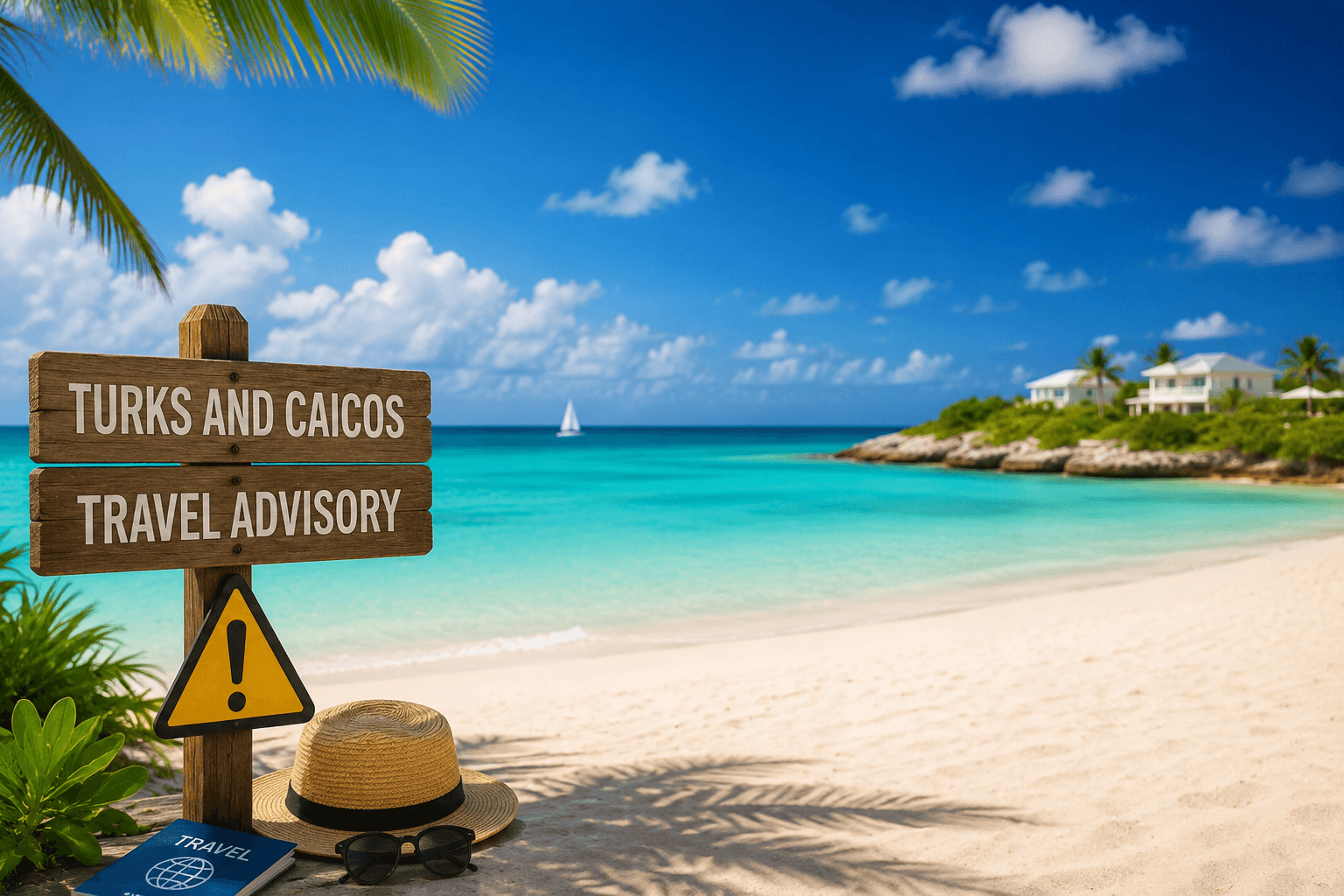
Turks and Caicos Travel Advisory 2026: The Truth Behind the Warning
A turquoise horizon, a single stray bullet, and a warning most travelers scroll past without reading. Here is what the advisory actually says, why it hasn't stopped a single sensible traveler from having the trip of a lifetime, and exactly how to stay on the right side of it.

Somewhere between the postcard and the passport control desk, most travelers skip a step. They book the flight, they pick the resort, they maybe even download a currency app. But they never actually read the fine print the U.S. State Department, the UK Foreign Office, and Global Affairs Canada have published about the destination they are about to visit. For Turks and Caicos, that fine print was quietly refreshed on July 7, 2026, and while nothing about it should cancel your trip, everything about it deserves five honest minutes of your attention before you pack your bags.
This guide breaks down the current advisory in plain language, explains the one law that has genuinely ruined vacations for otherwise careful travelers, and then pulls back to show you why, risk and all, this archipelago remains one of the most rewarding stretches of coastline in the Caribbean.
What "Level 2: Exercise Increased Caution" Actually Means
Advisory levels sound alarming until you see them in context. The U.S. Department of State ranks every destination on a four-point scale, and Turks and Caicos sits at Level 2, the same tier assigned to France and Germany. This is the same level assigned to countries such as France and Germany, and the Level 2 rating has been applied to Turks and Caicos for several years rather than as a new classification. That single fact reframes the headline: this is not a sudden downgrade, it is a long-standing, routinely reviewed classification.
Canada uses similar language. The Government of Canada recommends that travelers exercise a high degree of caution due to crime, the same tier applied to France and Germany, though in those cases the concern is terrorism rather than local crime. The UK takes a slightly different approach. The UK Foreign, Commonwealth and Development Office does not assign numbered advisory levels, but its safety and security guidance highlights an increased risk of crime specifically on Providenciales and Grand Turk.
So three allied governments, three slightly different formats, one consistent message: this is a normal, popular, generally welcoming destination that also has a crime problem worth understanding before you land.
Why the Advisory Was Just Reissued
The timing matters. The update was issued on July 7 and reinforces guidance that has applied to the territory for some time, giving travelers an updated snapshot of conditions before booking a trip. In other words, this was a scheduled refresh rather than a reaction to a single incident, and the underlying risk picture has not shifted dramatically.
What has stayed consistent is where the trouble concentrates. Most crime occurs in Providenciales, and police may have limited resources to investigate crimes. The advisory also flags something more serious than the average pickpocketing warning. There have been reports of sexual assaults in the Turks and Caicos Islands, alongside petty crime that is common, especially in popular tourist locations.
The good news is that the crime travelers are statistically most likely to encounter is mundane rather than violent. Most crimes against foreigners are crimes of opportunity, like purse snatching and pickpocketing, and tourists should also beware of overcharging and scams, including aggressive vendors offering "free" gifts that later come with demands for money.

The Firearm Law That Has Trapped More Than One Tourist
If there is a single paragraph in this entire advisory worth memorizing, it is this one. Turks and Caicos enforces one of the strictest firearm laws in the Caribbean, and it applies even when a traveler had no intention of breaking it.
Zero Tolerance, No Exceptions
- It is illegal to have firearms and ammunition in the Turks and Caicos Islands, including single bullets or cartridges brought by mistake in carry-on bags or luggage.
- A firearm license or permit obtained in the United States or any other country is not valid in the Turks and Caicos Islands.
- Police strictly enforce these laws, especially at the airport when travelers are leaving the country, and offenders may face 12 years or more in prison.
- Some travelers have been detained and unable to depart for several weeks or more after a single stray bullet was found in their luggage.
This is not a theoretical risk aimed at gun owners flying with declared firearms. It is a warning aimed at ordinary hunters, range regulars, and even casual shooters who forget a single cartridge rolling around the bottom of a range bag or jacket pocket. Travelers are urged to use different bags for travel than the ones used to store or carry weapons and ammunition at home, and to carefully check luggage before departing the United States. Five minutes with an empty bag and a good light source is a small price to pay against a possible prison sentence.
Practical Safety Habits That Actually Work
Beyond the ammunition warning, the advisory reads less like a list of exotic dangers and more like common-sense travel hygiene applied to a specific place. Recommended precautions include not answering your hotel or residence door unless you know who it is, using caution when walking or driving at night, and never physically resisting a robbery attempt.
Before You Even Board the Flight
- Enroll in the Smart Traveler Enrollment Program (STEP) to receive alerts and make it easier for officials to reach you in an emergency.
- Photograph your passport, travel insurance policy, and hotel confirmation, and store copies separately from the originals.
- Confirm your travel insurance covers medical evacuation, since serious cases on the islands are often transferred off-island.
- Keep valuables in a hotel safe rather than a beach bag, and avoid flashing large amounts of cash near ATMs after dark.
Canadian guidance adds a specific and useful detail for anyone renting a vehicle or catching a ride from a resort. Travelers are advised to avoid unmarked, illegal taxis known locally as "jitneys," since drivers connected to this informal network have been linked to sexual assaults. Sticking to licensed resort transfers, established taxi companies, and pre-booked drivers removes this risk almost entirely.
The islands are not dangerous by accident. They are dangerous only for the traveler who treats a warning label as decoration.
Looking for the most reliable way to lock in your flights before rates climb during peak season? Compare flight prices before you book so you can weigh nonstop routes into Providenciales against connections that may cost less but eat into beach time.
Beyond the Warning: Why Turks and Caicos Still Belongs on Your List
None of this changes the fundamental appeal of the destination. Grace Bay Beach has spent years collecting "best beach in the world" awards for a reason, and the vast majority of visitors experience nothing beyond sunburn and a reluctance to go home.

Entry Requirements Made Simple
Most visitors, including citizens of the US, UK, Canada, and the EU, do not need a visa and can stay for up to 90 days as tourists, though a valid passport and proof of onward travel are required at arrival. US, UK, and Canadian passport holders only need their passport valid for the duration of their stay, while other nationalities generally need at least six months of remaining validity. If your travel documents are close to expiring, or you are unsure whether transit rules affect a connecting flight, it is worth reviewing your paperwork with a trusted travel resource such as TorontoBook.com before you fly, particularly if your itinerary includes an airline change or a tight connection.
Currency, Costs, and Everyday Money Sense
The US Dollar is the sole legal tender across Turks and Caicos, so American travelers need no currency exchange, while visitors from Canada, the UK, or Europe should convert cash before arrival since there is no foreign exchange bureau at Providenciales International Airport. Budget with a buffer. A mandatory 12 percent tourism tax applies to most accommodation, dining, and tour bookings, and resort restaurants typically add a further 10 percent service charge, so the sticker price is rarely the final price.
When to Go
The dry season brings sunny days, low humidity, and calm, clear seas, making it the most popular stretch of the year, while April and May offer excellent weather with fewer crowds and softer resort rates before summer arrives. Travelers chasing a quieter, budget-friendlier trip should also keep an eye on the Atlantic hurricane season, which peaks between late summer and autumn.
Getting Around Once You Land
- All scheduled international flights land at Providenciales International Airport, and reaching the smaller outer islands typically requires a short domestic flight.
- There is no public bus or train system on any island, so most visitors rent a vehicle, keeping in mind that driving is on the left.
- Licensed taxis operate on all the main islands, though fares run high and availability can be limited on smaller islands, which often makes a rental car more practical.
A Two-Day Grace Bay Sampler
| Time | Activity |
|---|---|
| Day 1, morning | Sunrise walk along Grace Bay Beach before the crowds arrive |
| Day 1, afternoon | Snorkeling trip along the Princess Alexandra reef system |
| Day 1, evening | Dinner in the Grace Bay restaurant strip, confirming service charges before tipping |
| Day 2, morning | Day trip to Chalk Sound National Park for its impossibly blue lagoon |
| Day 2, afternoon | Guided boat excursion around the outer cays |
| Day 2, evening | Sunset from a Long Bay Beach vantage point, ideal for photography |
If reef tours and lagoon excursions are already on your shortlist, it is worth locking them in ahead of time rather than hoping for last-minute availability. You can book skip-the-line tickets for popular island excursions before your flight even lands, which matters most during the busiest winter months when boats fill up fast.

Frequently Asked Questions
Is it safe to visit Turks and Caicos right now?
For the overwhelming majority of visitors who stick to resort areas, travel with a group or trusted driver, and avoid isolated beaches after dark, the islands remain a low-drama, high-reward destination. The advisory asks for increased caution, not cancellation.
Why is Turks and Caicos rated the same as France or Germany?
The Level 2 classification simply means "exercise increased caution," and it happens to be the same tier assigned to France and Germany, even though the underlying concerns differ, crime in one case and terrorism potential in the other.
What happens if I accidentally bring a bullet in my luggage?
Even a single stray cartridge found in carry-on or checked luggage can lead to arrest, since local law treats it the same as illegal firearm possession, with penalties reaching 12 years or more in prison. Check every pocket and bag lining before you fly.
Do I need a visa to enter Turks and Caicos?
Most travelers from the US, UK, Canada, and the EU do not need a visa and may stay up to 90 days as tourists, provided they carry a valid passport and proof of onward travel.
What currency should I bring?
The US Dollar is the only legal tender, so American travelers need no exchange, while other nationalities should convert cash before arrival since there is no currency exchange counter at the main airport.
Ready to Plan Your Trip?
Save this guide before you close the tab. A quick screenshot or a Pinterest save now means you won't be re-reading advisory pages from an airport lounge later.
Search Today's Flight PricesTurks and Caicos has not stopped being one of the most photogenic corners of the Caribbean, and it has not suddenly become dangerous. What has changed is how much a smart traveler now knows before landing at Providenciales: which neighborhoods to treat with extra care, why an empty ammunition pocket matters more than an empty suitcase, and how a single overlooked bullet can turn a dream trip into a legal nightmare. Read the advisory, pack accordingly, and the beach will still be exactly as blue as the photos promised.